Loading your guide…
Star Trek
TV Show (1966)
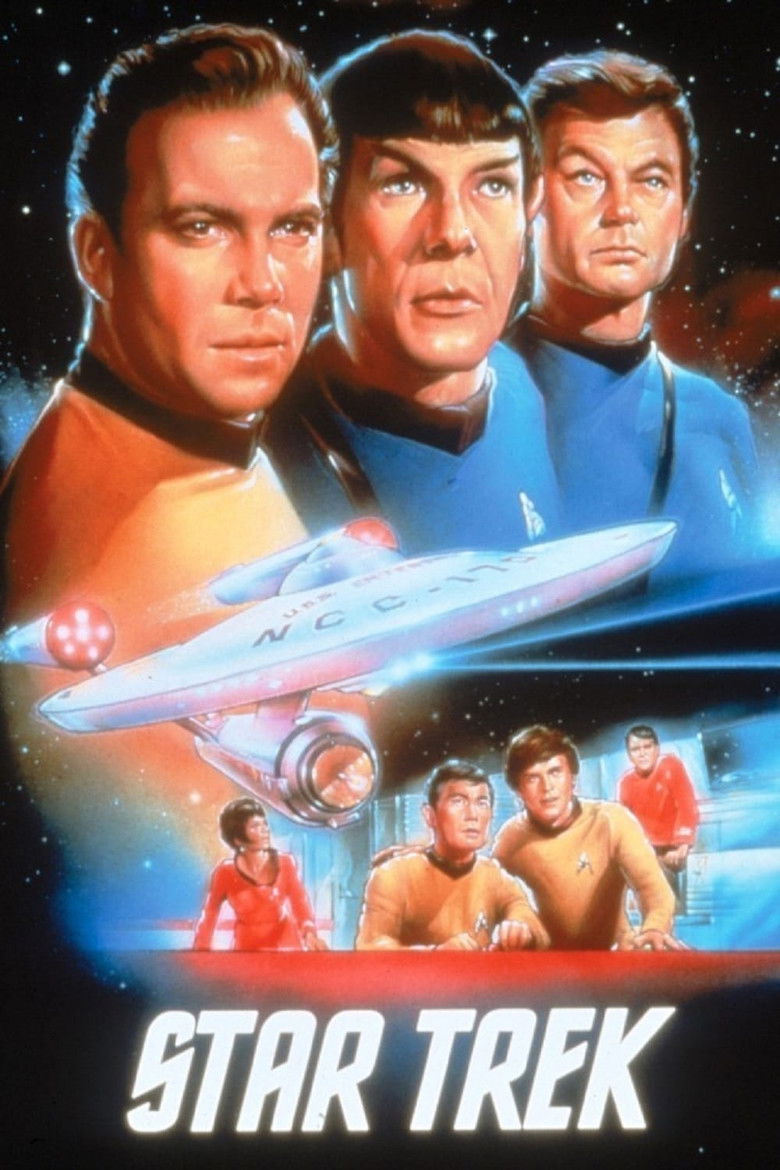
Space. The Final Frontier. The U.S.S. Enterprise embarks on a five year mission to explore the galaxy. The Enterprise is under the command of Captain James T. Kirk with First Officer Mr. Spock, from the planet Vulcan. With a determined crew, the Enterprise encounters Klingons, Romulans, time paradoxes, tribbles and genetic supermen led by Khan Noonian Singh. Their mission is to explore strange new worlds, to seek new life and new civilizations, and to boldly go where no man has gone before.
Would this suit your child?
Tell us their age and what you’d like a heads-up about. We’ll highlight the relevant parts of this guide.
Your preferences highlight the guidance. They never hide warnings or change the ratings.
Content at a glance
More filled segments mean stronger content.
Sex & Nudity
The show features occasional romantic tension, brief kissing, and women in form-fitting outfits typical of 1960s television. There is no graphic content or nudity depicted.
Violence & Gore
Action consists primarily of stylized fistfights, hand-to-hand combat, and laser-fire exchanges. Injuries are rarely graphic, focusing more on the heroics of the struggle.
Profanity
The dialogue is very clean by modern standards, featuring only extremely mild language such as 'd*mn' or 'h*ll' used sparingly in dramatic contexts.
Alcohol, Drugs & Smoking
Characters are occasionally seen consuming alcoholic beverages in social settings, such as at the mess hall or in the Captain's quarters. Tobacco smoking is occasionally present as a period-typical behavior.
Frightening Scenes
Some episodes feature suspenseful encounters with alien creatures, psychological tension, or eerie space phenomena. These scenes are designed for general audiences and lack modern horror tropes.
Key Insights
Quick summary and important considerations
A brave crew travels through space to make new friends and solve mysteries, showing that it takes teamwork and kindness to face the unknown.
Detailed Analysis
In-depth insights for parents and educators
What Parents Need to Know
Episodes contain frequent, non-graphic physical altercations consistent with 1960s television standards. Some thematic elements involve psychological distress and abstract science-fiction concepts.
What Kids Can Learn
Viewers develop an appreciation for diversity, the importance of listening to different perspectives, and the value of scientific inquiry.
Key Topics Discussed
Space exploration
Ethics
Leadership
Why Parents Might Like It
It offers timeless storytelling that explores fundamental human questions within a classic, imaginative setting.
Positives & learning
More filled segments mean stronger positive content or learning value.
Positive messages
Emphasizes the importance of diplomacy, scientific curiosity, and the moral imperative to protect and understand new life forms.
Role models
The command crew demonstrates high levels of professional integrity, loyalty, and logical problem-solving even under extreme duress.
Representation
Groundbreaking for its time, the cast includes multi-ethnic individuals in positions of authority, providing a vision of an inclusive future.
Learning
Encourages interest in space exploration, critical thinking, and ethical decision-making regarding societal interactions.
Looking for something more suitable?
Enjoy the idea of Star Trek? Explore some related ideas with younger audiences in mind.
Choose your children’s ages to find a closer fit.
Finding related ideas for younger audiences. They’ll appear here automatically.
The connection gives you a starting point. Each guide keeps the full picture of content and age suitability.
Parent Reviews(0)
Share your experience to help other parents
No reviews yet
Be the first to share your thoughts about this tv show!