Loading your guide…
Serial Experiments Lain
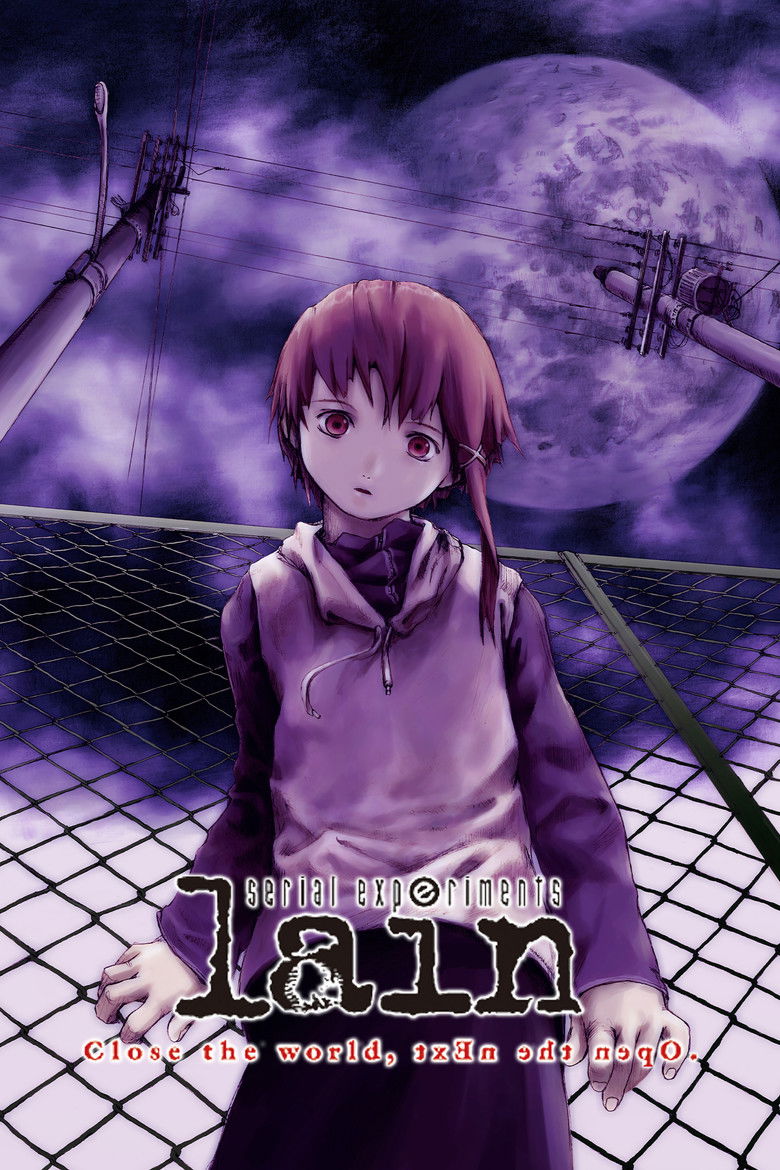
TV Show (1998)
Lain—driven by the abrupt suicide of a classmate—logs on to the Wired and promptly loses herself in a twisted mass of hallucinations, memories, and interconnected-psyches.
TV Show (1998)
Lain—driven by the abrupt suicide of a classmate—logs on to the Wired and promptly loses herself in a twisted mass of hallucinations, memories, and interconnected-psyches.
Would this suit your child?
Tell us their age and what you’d like a heads-up about. We’ll highlight the relevant parts of this guide.
Your preferences highlight the guidance. They never hide warnings or change the ratings.
Content at a glance
More filled segments mean stronger content.
Sex & Nudity
There is very little sexual content in the show, though there are occasional shots of character silhouettes or artistic depictions that may be considered mildly suggestive. It is generally free of explicit romantic or sexual situations.
Violence & Gore
The series contains moderate violence, including some scenes involving blood, injuries, and a few disturbing sequences related to the central mystery. It relies more on psychological impact than constant physical combat.
Profanity
The dialogue contains occasional mild language, such as 'd*mn' and 'h*ll,' typically used in casual conversation or emotional outbursts. The use is infrequent throughout the series.
Alcohol, Drugs & Smoking
There are scenes depicting characters smoking cigarettes and occasional social drinking. These instances are portrayed as typical character habits and are not a central focus of the plot.
Frightening Scenes
This show is heavily focused on psychological tension, existential dread, and surreal hallucinations that can be deeply disturbing for younger viewers. It creates a constant sense of unease and paranoia that is intense and pervasive.
Key Insights
Quick summary and important considerations
This show is a complex, artistic puzzle about how computers and the internet change how we think and see the world, intended for older teens interested in deep, abstract ideas.
Content Warnings
Suicide
Psychological distress
Depiction of self-harm
Detailed Analysis
In-depth insights for parents and educators
What Parents Need to Know
The narrative centers on a student's suicide, leading to disturbing imagery, hallucinations, and themes of societal decay that may trigger viewers sensitive to mental health struggles.
What Kids Can Learn
Viewers develop analytical skills through the show's non-linear structure and gain a heightened awareness of digital privacy and human interconnectedness.
Key Topics Discussed
Existentialism
Technological advancement
Consciousness
Why Parents Might Like It
The series is highly regarded for its groundbreaking animation, influential cyberpunk aesthetic, and sophisticated exploration of the internet's influence on the human experience.
Positives & learning
More filled segments mean stronger positive content or learning value.
Positive messages
Encourages viewers to critically examine the impact of digital connectivity on individual identity and the importance of separating virtual personas from physical reality.
Role models
Characters struggle with profound isolation and deteriorating mental health, offering limited examples of stable, aspirational behavioral patterns.
Representation
Features a female lead in a technical, science-fiction context, though most character backgrounds and demographics remain standard for the genre.
Learning
Provides a foundation for philosophical discussions regarding post-humanism, the nature of consciousness, and the societal evolution of the internet.
Looking for something more suitable?
Enjoy the idea of Serial Experiments Lain? Explore some related ideas with younger audiences in mind.
Choose your children’s ages to find a closer fit.
Finding related ideas for younger audiences. They’ll appear here automatically.
The connection gives you a starting point. Each guide keeps the full picture of content and age suitability.
Parent Reviews(0)
Share your experience to help other parents
No reviews yet
Be the first to share your thoughts about this tv show!