Loading your guide…
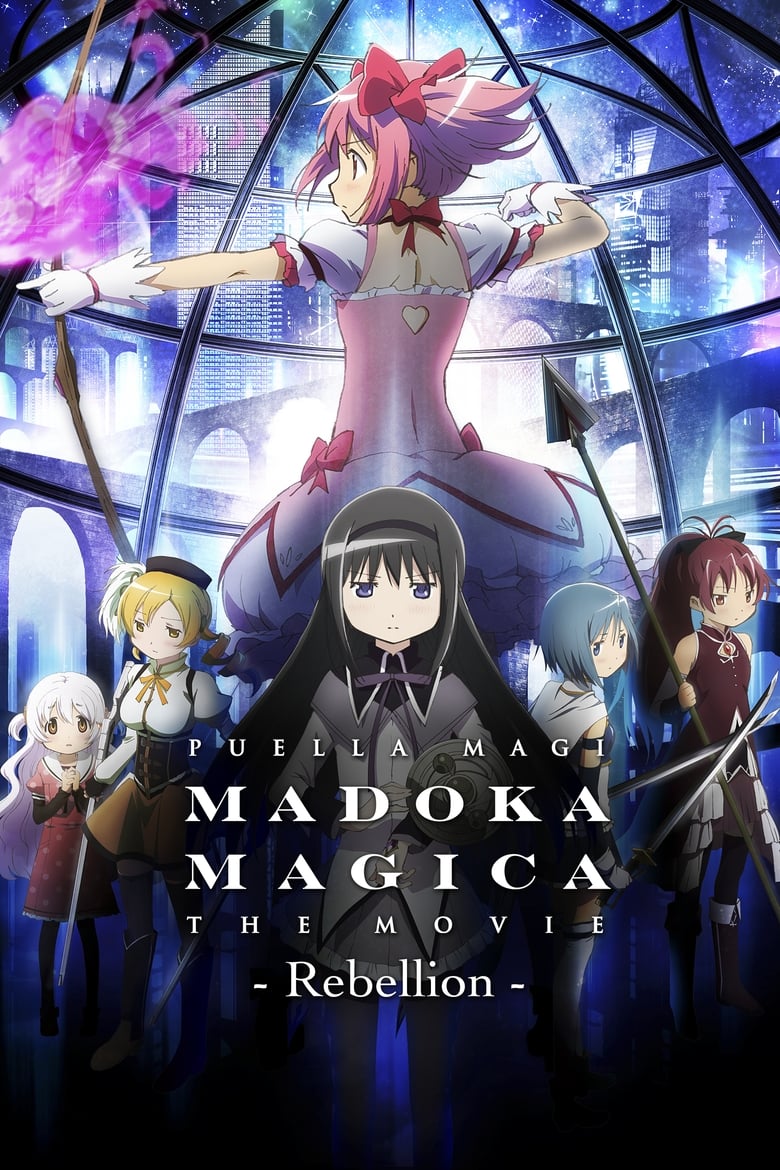
Puella Magi Madoka Magica the Movie Part III: Rebellion
Movie (2013)
Following Madoka's rewriting of the universe, sacrificing herself and her happy normal days to save all magical girls from the cruel fate that awaited them by wiping witches out of existence, the despair still manifest into creatures known as nightmares. Magical girl Homura Akemi continues to fight alone in the hope that she will be able to see Madoka smile again.
Would this suit your child?
Tell us their age and what you’d like a heads-up about. We’ll highlight the relevant parts of this guide.
Your preferences highlight the guidance. They never hide warnings or change the ratings.
Content at a glance
More filled segments mean stronger content.
Sex & Nudity
There are some artistic, abstract shots involving transformation sequences that feature non-sexual nudity similar to a mannequin or statue. It is stylized and lacks any explicit or suggestive intent.
Violence & Gore
The film features stylized magical combat with weapons and energy blasts, though it avoids excessive blood or gore. The action is frequent and intense, focusing on high-stakes battles between magical beings.
Profanity
The Australian classification assessment records very mild language impact for the original film.
Alcohol, Drugs & Smoking
There is no depiction of alcohol, drug use, or smoking within the film's narrative.
Frightening Scenes
The movie contains heavy psychological themes, existential dread, and surreal, nightmarish imagery that can be very distressing. The emotional intensity is high, with several scenes depicting mental suffering and complex, disturbing character dilemmas.
Key Insights
Quick summary and important considerations
Mature themes and fantasy violence feature in this dark, emotionally intense animated film. The surreal imagery and psychological distress may upset younger viewers; it is not simply a gentle story about friendship. These notes concern the 2013 Rebellion feature.
Content Warnings
Existential dread
Depiction of psychological distress
Detailed Analysis
In-depth insights for parents and educators
What Parents Need to Know
Mature themes and fantasy violence feature in this dark, emotionally intense animated film. The surreal imagery and psychological distress may upset younger viewers; it is not simply a gentle story about friendship. These notes concern the 2013 Rebellion feature.
What Kids Can Learn
Older viewers can analyze the complexities of moral compromise and the long-term effects of grief and isolation.
Key Topics Discussed
Existentialism
Sacrifice
Psychology
Why Parents Might Like It
The animation is visually striking and the narrative structure provides a mature, intellectually challenging experience for fans of psychological drama.
Positives & learning
More filled segments mean stronger positive content or learning value.
Positive messages
Emphasizes the strength of personal sacrifice and the importance of unwavering loyalty to loved ones. It challenges viewers to consider the personal cost of idealism.
Role models
Characters demonstrate fierce determination and independence, though their decision-making is often driven by intense personal obsession and moral ambiguity.
Representation
No specific diversity content indicated in available information regarding marginalized groups.
Learning
Provides a case study in non-linear storytelling and thematic exploration of philosophical concepts like utilitarianism.
Looking for something more suitable?
Enjoy the idea of Puella Magi Madoka Magica the Movie Part III: Rebellion? Explore some related ideas with younger audiences in mind.
Choose your children’s ages to find a closer fit.
Finding related ideas for younger audiences. They’ll appear here automatically.
The connection gives you a starting point. Each guide keeps the full picture of content and age suitability.
Parent Reviews(0)
Share your experience to help other parents
No reviews yet
Be the first to share your thoughts about this movie!