Loading your guide…
Lords of the Realm III
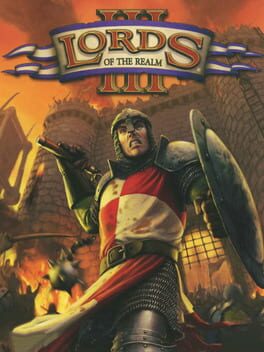
Game (2004)
At the start of a game, the player must choose a noble by either selecting one of the default nobles or creating a new one. Nobles act as user accounts within the game, wherein completed campaigns and saved games are local to each noble. A noble consists of three customizable features: housename, portrait, and heraldry. Once a noble is selected, the player can choose to play a campaign or battle map, or load a saved game. While all the battle maps are available when a noble is created, the campaigns require that the player complete each level in sequence.
Game (2004)
At the start of a game, the player must choose a noble by either selecting one of the default nobles or creating a new one. Nobles act as user accounts within the game, wherein completed campaigns and saved games are local to each noble. A noble consists of three customizable features: housename, portrait, and heraldry. Once a noble is selected, the player can choose to play a campaign or battle map, or load a saved game. While all the battle maps are available when a noble is created, the campaigns require that the player complete each level in sequence.
Would this suit your child?
Tell us their age and what you’d like a heads-up about. We’ll highlight the relevant parts of this guide.
Your preferences highlight the guidance. They never hide warnings or change the ratings.
Content at a glance
More filled segments mean stronger content.
Sex & Nudity
The game focuses on medieval strategy and management, containing no romantic or sexual content.
Violence & Gore
As a real-time strategy war game, it involves soldiers engaging in combat and sieges, though the visuals are stylized and not graphic or overly bloody.
Profanity
The game does not contain any inappropriate language or profanity.
Alcohol, Drugs & Smoking
There are no references to alcohol, tobacco, or drugs within the game's mechanics or narrative.
Frightening Scenes
The game features mild tension associated with tactical decision-making and war scenarios, but nothing intended to be frightening or disturbing.
Key Insights
Quick summary and important considerations
You take on the role of a noble in a medieval setting, where you build your own house, lead campaigns, and manage territories in a strategy-based game.
Detailed Analysis
In-depth insights for parents and educators
What Parents Need to Know
This is a computer-based strategy game that requires significant attention and time investment. No mature content indicated in available information.
What Kids Can Learn
Players develop analytical skills and the ability to formulate multi-step plans to achieve objectives.
Key Topics Discussed
Medieval history
Strategic planning
Resource management
Why Parents Might Like It
It encourages thoughtful problem-solving and strategic thinking rather than purely reflex-based gameplay.
Positives & learning
More filled segments mean stronger positive content or learning value.
Positive messages
Players focus on logical progression and the sequential completion of goals within a strategic framework.
Role models
Characters function primarily as avatars for gameplay mechanics rather than moral archetypes.
Representation
Checking this category…
Learning
The game promotes deductive reasoning, resource allocation, and the ability to organize complex tasks sequentially.
Looking for something more suitable?
Enjoy the idea of Lords of the Realm III? Explore some related ideas with younger audiences in mind.
Choose your children’s ages to find a closer fit.
Finding related ideas for younger audiences. They’ll appear here automatically.
The connection gives you a starting point. Each guide keeps the full picture of content and age suitability.
Parent Reviews(0)
Share your experience to help other parents
No reviews yet
Be the first to share your thoughts about this game!