Loading your guide…
Lords of Magic
Game (1997)
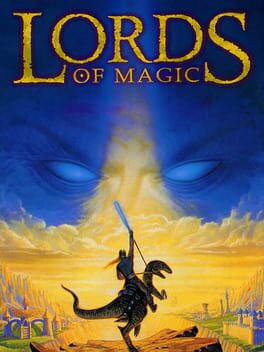
In the fantasy world known as Urak, supporters of eight different religions constantly fight each other. One of them is Balkoth, known as the Lord of Death, who worships the dark deity Golgoth. Balkoth has sworn to destroy all other faiths in the name of his own god. The other lords have to expand their ranks and defend themselves against the mad zealot. Lords of Magic is a strategy game that combines turn-based exploration and resource management with real-time combat. The player can choose to control any of the lords who oppose Balkoth. Each nation (faith) commanded by a lord has its own specific units. Before engaging in an offensive, the player must liberate a Great Temple for the faith of his/her choice. It is also necessary to build a stronghold, develop the nation's capital city, and recruit troops. The troops are led by a champion, representing the "hero" of the game. This hero can be either a warrior, a thief, or a mage, possessing the classical advantages and disadvantages of these classes: the warrior is good in close combat, the thief can sabotage enemy armies, and the physically weak mage can cast devastating spells. The isometric combat proceeds in real-time, with an option to simply calculate the result of a battle immediately, depending on the participants' statistics.
Game (1997)
In the fantasy world known as Urak, supporters of eight different religions constantly fight each other. One of them is Balkoth, known as the Lord of Death, who worships the dark deity Golgoth. Balkoth has sworn to destroy all other faiths in the name of his own god. The other lords have to expand their ranks and defend themselves against the mad zealot. Lords of Magic is a strategy game that combines turn-based exploration and resource management with real-time combat. The player can choose to control any of the lords who oppose Balkoth. Each nation (faith) commanded by a lord has its own specific units. Before engaging in an offensive, the player must liberate a Great Temple for the faith of his/her choice. It is also necessary to build a stronghold, develop the nation's capital city, and recruit troops. The troops are led by a champion, representing the "hero" of the game. This hero can be either a warrior, a thief, or a mage, possessing the classical advantages and disadvantages of these classes: the warrior is good in close combat, the thief can sabotage enemy armies, and the physically weak mage can cast devastating spells. The isometric combat proceeds in real-time, with an option to simply calculate the result of a battle immediately, depending on the participants' statistics.
Would this suit your child?
Tell us their age and what you’d like a heads-up about. We’ll highlight the relevant parts of this guide.
Your preferences highlight the guidance. They never hide warnings or change the ratings.
Content at a glance
More filled segments mean stronger content.
Sex & Nudity
The game focuses on fantasy strategy and combat with no romantic or suggestive content.
Violence & Gore
The game features isometric, small-scale combat between fantasy units, but it lacks graphic blood, gore, or realistic injury depictions.
Profanity
The dialogue is strictly related to fantasy questing and strategy, containing no coarse or inappropriate language.
Alcohol, Drugs & Smoking
There is no substance use or references to alcohol, drugs, or smoking within the gameplay.
Frightening Scenes
While the story involves dark themes regarding a 'Lord of Death,' the presentation is stylized and lacks jump scares or genuinely frightening imagery.
Key Insights
Quick summary and important considerations
In this strategy game, you act as a leader managing a civilization and commanding armies to defend your people from a hostile threat in a fantasy land.
Content Warnings
Religious conflict themes
Violent fantasy combat
Detailed Analysis
In-depth insights for parents and educators
What Parents Need to Know
The game features ongoing warfare and centers on a conflict driven by extreme religious devotion. Combat is tactical in nature, involving magical spells and troop recruitment.
What Kids Can Learn
Players sharpen problem-solving abilities and learn to anticipate enemy behaviors through systems-based thinking.
Key Topics Discussed
Tactical strategy
Fantasy warfare
Civilization management
Why Parents Might Like It
It provides a deep, intellectually engaging experience that challenges players to think multiple steps ahead, functioning as a mental exercise in management.
Positives & learning
More filled segments mean stronger positive content or learning value.
Positive messages
Emphasizes the importance of strategic planning, resource allocation, and defensive collaboration against extremist ideologies.
Role models
Characters embody classical archetypes of warriors and leaders, though they function primarily as tactical avatars rather than complex narrative figures.
Representation
No diverse representations indicated in available information; factions are defined by religious and class-based archetypes.
Learning
Develops analytical skills through long-term planning, urban development logistics, and weighing the costs and benefits of tactical maneuvers.
Looking for something more suitable?
Enjoy the idea of Lords of Magic? Explore some related ideas with younger audiences in mind.
Choose your children’s ages to find a closer fit.
Finding related ideas for younger audiences. They’ll appear here automatically.
The connection gives you a starting point. Each guide keeps the full picture of content and age suitability.
Parent Reviews(0)
Share your experience to help other parents
No reviews yet
Be the first to share your thoughts about this game!