Loading your guide…
Harvest Moon: Back to Nature
Game (1999)
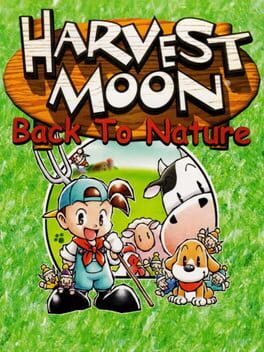
Natsume's farm simulation series makes its debut on the PlayStation with Harvest Moon: Back to Nature. It is the first Harvest Moon game for a non-Nintendo console. Starting with a few rudimentary implements and very little money, players begin the arduous task of reviving their grandfather's farm and thereby claiming their place as its rightful heir. Players are given three years to achieve this goal. A year consists of four seasons, each of which lasts 30 days. Different crops can be planted each season, but before the seeds can be planted, the land must be cleared and then the soil tilled. Seeds must also be watered until the fruit or vegetable matures. Once the crops are ready for harvest, they can be placed in a shipping bin where they'll be collected and paid for. In addition to farming, players will interact with local villagers and partake in seasonal events such as the Tomato Festival and Fireworks Display. As more money is earned, players can expand their farm and begin to raise livestock such as chickens and cows.
Game (1999)
Natsume's farm simulation series makes its debut on the PlayStation with Harvest Moon: Back to Nature. It is the first Harvest Moon game for a non-Nintendo console. Starting with a few rudimentary implements and very little money, players begin the arduous task of reviving their grandfather's farm and thereby claiming their place as its rightful heir. Players are given three years to achieve this goal. A year consists of four seasons, each of which lasts 30 days. Different crops can be planted each season, but before the seeds can be planted, the land must be cleared and then the soil tilled. Seeds must also be watered until the fruit or vegetable matures. Once the crops are ready for harvest, they can be placed in a shipping bin where they'll be collected and paid for. In addition to farming, players will interact with local villagers and partake in seasonal events such as the Tomato Festival and Fireworks Display. As more money is earned, players can expand their farm and begin to raise livestock such as chickens and cows.
Would this suit your child?
Tell us their age and what you’d like a heads-up about. We’ll highlight the relevant parts of this guide.
Your preferences highlight the guidance. They never hide warnings or change the ratings.
Content at a glance
More filled segments mean stronger content.
Sex & Nudity
The game features a romantic interest system where players can court and eventually marry villagers, which includes brief heart-themed animations and proposals, but there is no explicit content or nudity.
Violence & Gore
There is no physical combat or violence in the game; the player uses simple tools exclusively for farming and clearing land.
Profanity
The dialogue is entirely clean and appropriate for all ages, with no use of swear words or inappropriate language.
Alcohol, Drugs & Smoking
Some adult characters may be seen occasionally drinking at the village bar, but it is infrequent, background-only, and never presented as a major theme.
Frightening Scenes
The game has a peaceful, low-stress atmosphere with no frightening content or intense themes.
Key Insights
Quick summary and important considerations
This game lets you run your own farm where you plant crops, care for animals, and make friends with your neighbors in a peaceful town.
Detailed Analysis
In-depth insights for parents and educators
What Parents Need to Know
The game is entirely free of combat, crude humor, and mature language. It is a slow-paced experience that encourages focus and attention to detail.
What Kids Can Learn
Players learn to manage limited resources and understand the cause-and-effect relationship between consistent labor and successful harvests.
Key Topics Discussed
Farming
Economics
Community
Why Parents Might Like It
It offers a calming, non-stressful digital environment that rewards steady effort over quick reflexes or high-stakes competition.
Positives & learning
More filled segments mean stronger positive content or learning value.
Positive messages
Emphasizes the value of hard work, long-term planning, and community involvement. It promotes patience through a three-year growth cycle and environmental stewardship.
Role models
The protagonist acts as a diligent worker improving their environment. Villagers offer friendly, consistent social interactions that model polite community engagement.
Representation
No specific diverse representation indicated in available information regarding ethnicity, culture, or background.
Learning
Introduces basic economic concepts such as budgeting, profit margins, and time management. Teaches planning and sequential thinking through seasonal agricultural cycles.
Looking for something more suitable?
Enjoy the idea of Harvest Moon: Back to Nature? Explore some related ideas with younger audiences in mind.
Choose your children’s ages to find a closer fit.
Finding related ideas for younger audiences. They’ll appear here automatically.
The connection gives you a starting point. Each guide keeps the full picture of content and age suitability.
Parent Reviews(0)
Share your experience to help other parents
No reviews yet
Be the first to share your thoughts about this game!