Loading your guide…
Great Teacher Onizuka
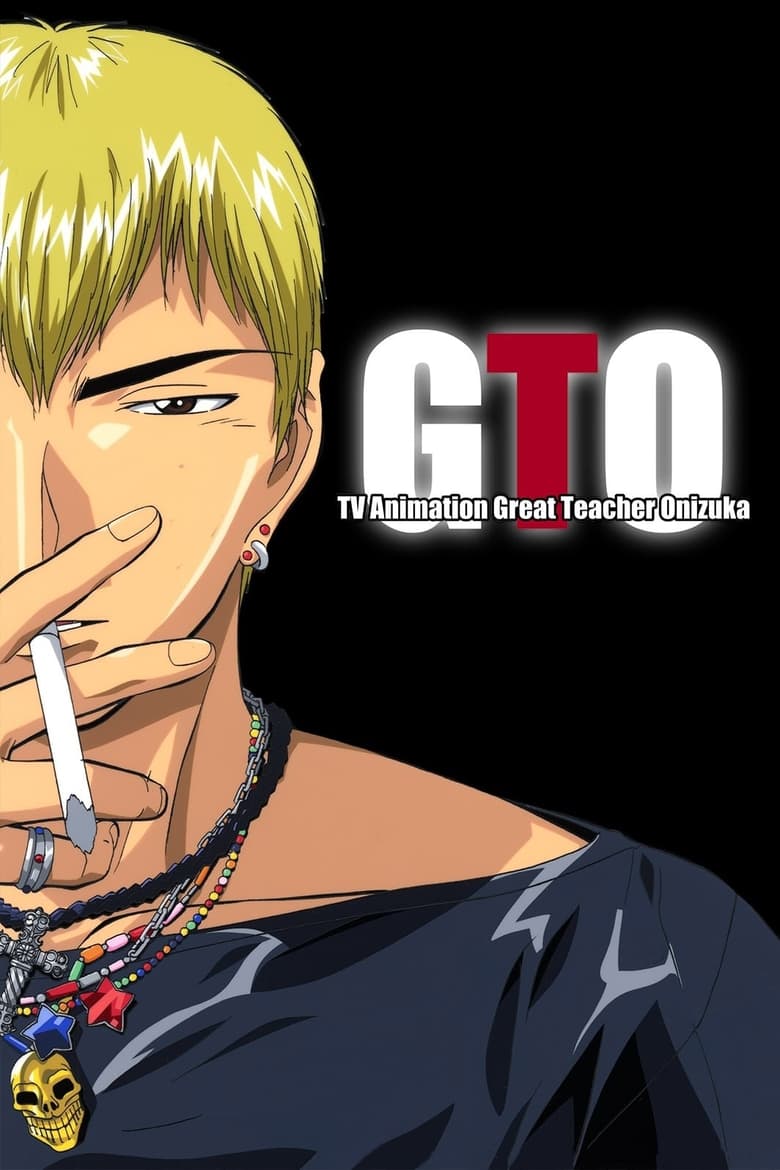
TV Show (1999)
A former gang member wants to be Japan's best teacher. When he's hired to supervise a class of hopeless cases, it's his chance to prove himself.
TV Show (1999)
A former gang member wants to be Japan's best teacher. When he's hired to supervise a class of hopeless cases, it's his chance to prove himself.
Would this suit your child?
Tell us their age and what you’d like a heads-up about. We’ll highlight the relevant parts of this guide.
Your preferences highlight the guidance. They never hide warnings or change the ratings.
Content at a glance
More filled segments mean stronger content.
Sex & Nudity
The series frequently features suggestive situations, camera angles focusing on characters' bodies, and occasional scenes involving partial nudity or lingerie. Sexual humor and references to inappropriate conduct are common themes throughout the show.
Violence & Gore
As a former gang member, the protagonist often engages in physical brawls and slapstick altercations. While the violence is often played for comedic effect, there are instances of moderate intensity, bullying, and injuries depicted.
Profanity
The dialogue contains frequent use of strong language including 'sh*t', 'b*tch', 'f*ck', and 'a**h*le', usually shouted in fits of anger or frustration by the main character and students.
Alcohol, Drugs & Smoking
Characters are frequently shown smoking cigarettes and consuming alcohol at bars or in social settings. These substances are integrated into the lifestyle of several characters and are regularly present on screen.
Frightening Scenes
The series deals with dark themes such as severe bullying, suicide attempts, and psychological manipulation of students. These moments create a high level of emotional tension and distress that may be unsettling for younger viewers.
Key Insights
Quick summary and important considerations
This show is about a teacher who uses his past experiences to help his students overcome personal challenges and succeed in school.
Content Warnings
Bullying
Physical conflict
Suggestive themes
Detailed Analysis
In-depth insights for parents and educators
What Parents Need to Know
Contains themes of delinquency, intense bullying, and the influence of gang culture, alongside comedic scenarios involving adult authority figures.
What Kids Can Learn
Develops perspectives on emotional resilience, the necessity of teacher-student rapport, and the impact of social standing in peer groups.
Key Topics Discussed
Education
Mentorship
Adolescent development
Why Parents Might Like It
Provides a satirical yet poignant look at the struggles of both educators and students, offering a relatable perspective on navigating difficult institutional environments.
Positives & learning
More filled segments mean stronger positive content or learning value.
Positive messages
Emphasizes the importance of empathy, second chances, and looking beyond initial appearances. Highlights the potential for personal transformation and the impact of a dedicated mentor on troubled youth.
Role models
The protagonist acts as an unconventional mentor who breaks down barriers, though his aggressive background and non-traditional methods make him a flawed and complex figure rather than a conventional role model.
Representation
No diverse representation of marginalized groups indicated in available information; features a culturally specific Japanese school environment with homogenous character demographics.
Learning
Offers social-emotional insights into the lives of teenagers and the challenges of the educational system, though it is primarily a character-driven comedy-drama.
Looking for something more suitable?
Enjoy the idea of Great Teacher Onizuka? Explore some related ideas with younger audiences in mind.
Choose your children’s ages to find a closer fit.
Finding related ideas for younger audiences. They’ll appear here automatically.
The connection gives you a starting point. Each guide keeps the full picture of content and age suitability.
Parent Reviews(0)
Share your experience to help other parents
No reviews yet
Be the first to share your thoughts about this tv show!