Loading your guide…
Declaration of Fools
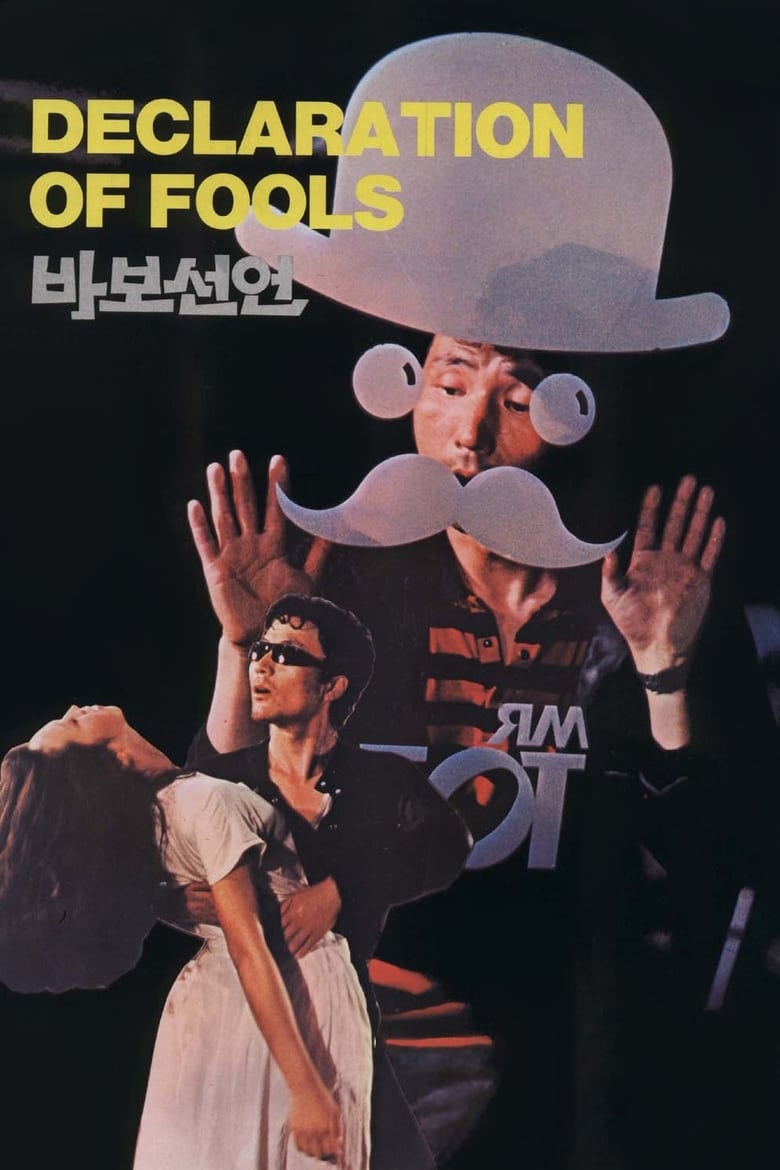
Movie (1983)
Beginning with the suicide of a film director, this work represents the Korean New Wave Cinema movement that focused on criticizing the Korean society in the 1980s through satire and humor. The journey taken by the characters, who lead low lives at the margins of the society, award them with a sense of liberation, however brief.
Movie (1983)
Beginning with the suicide of a film director, this work represents the Korean New Wave Cinema movement that focused on criticizing the Korean society in the 1980s through satire and humor. The journey taken by the characters, who lead low lives at the margins of the society, award them with a sense of liberation, however brief.
Would this suit your child?
Tell us their age and what you’d like a heads-up about. We’ll highlight the relevant parts of this guide.
Your preferences highlight the guidance. They never hide warnings or change the ratings.
Content at a glance
More filled segments mean stronger content.
Sex & Nudity
The film features suggestive themes and some scenes depicting characters in situations typical of 1980s adult-oriented satire, though it avoids explicit sexual content.
Violence & Gore
The movie contains some scenes of physical conflict and emotional outbursts, but it avoids graphic injury or prolonged aggressive action.
Profanity
The dialogue includes mild to moderate colloquialisms and insults, such as "b*stard" and "sh*t" (used infrequently to express frustration during character arguments).
Alcohol, Drugs & Smoking
Characters frequently consume alcohol and smoke throughout the film as part of the social and cultural depiction of life on the margins of society.
Frightening Scenes
The film opens with a depiction of suicide and maintains an overall tone of cynical social commentary, which may be emotionally heavy or disturbing for younger viewers.
Key Insights
Quick summary and important considerations
This movie is a serious look at how people find ways to feel free even when life is very difficult and unfair.
Content Warnings
Suicide
Detailed Analysis
In-depth insights for parents and educators
What Parents Need to Know
The film opens with a suicide and maintains a heavy, satirical tone throughout. It is an arthouse production focused on social critique, unsuitable for younger viewers due to its bleak subject matter.
What Kids Can Learn
Viewers learn about the importance of social awareness and how art can be used to critique and reflect the realities of a nation's history.
Key Topics Discussed
Social inequality
Historical political climate
Personal autonomy
Why Parents Might Like It
It serves as an essential historical artifact of Korean cinema, offering a sophisticated look at a pivotal era of social reform.
Positives & learning
More filled segments mean stronger positive content or learning value.
Positive messages
Encourages empathy for societal outcasts and highlights the human desire for personal freedom despite oppressive circumstances.
Role models
Characters are depicted as flawed individuals living on the fringes of society; they act as archetypes of survival rather than traditional moral beacons.
Representation
The film provides authentic, grounded representation of marginalized classes within 1980s South Korean society, granting them agency as the central focus of the narrative.
Learning
Offers a window into the cultural and political climate of 1980s South Korea and the artistic influence of the New Wave movement.
Looking for something more suitable?
Enjoy the idea of Declaration of Fools? Explore some related ideas with younger audiences in mind.
Choose your children’s ages to find a closer fit.
Finding related ideas for younger audiences. They’ll appear here automatically.
The connection gives you a starting point. Each guide keeps the full picture of content and age suitability.
Parent Reviews(0)
Share your experience to help other parents
No reviews yet
Be the first to share your thoughts about this movie!