Loading your guide…
A Clockwork Orange
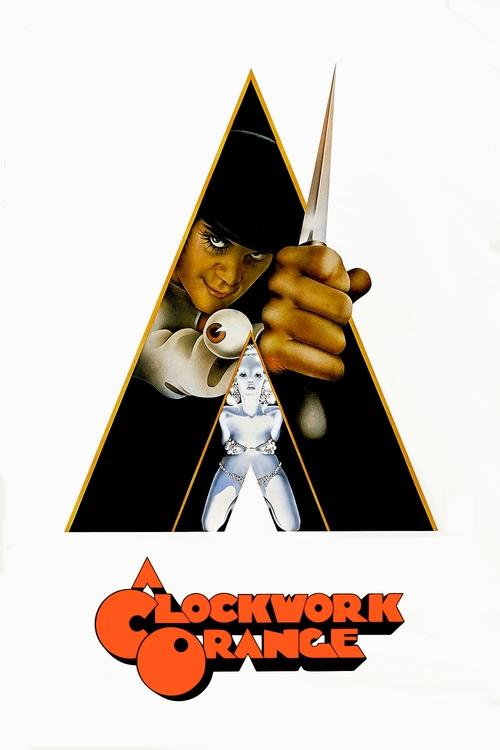
Movie (1971)
In a near-future Britain, young Alexander DeLarge and his pals get their kicks beating and raping anyone they please. When not destroying the lives of others, Alex swoons to the music of Beethoven. The state, eager to crack down on juvenile crime, gives an incarcerated Alex the option to undergo an invasive procedure that'll rob him of all personal agency. In a time when conscience is a commodity, can Alex change his tune?
Would this suit your child?
Tell us their age and what you’d like a heads-up about. We’ll highlight the relevant parts of this guide.
Your preferences highlight the guidance. They never hide warnings or change the ratings.
Content at a glance
More filled segments mean stronger content.
Sex & Nudity
Several rapes are shown or strongly implied, including one while a character sings Singin' in the Rain. There is brief nudity, including a topless woman, and sexual imagery in the conditioning films.
Violence & Gore
Graphic, prolonged ultra-violence, including beatings, a woman bludgeoned with a sculpture, and a writer crippled by a gang. Violence is central and very intense throughout.
Profanity
Moderate swearing and crude language, much of it in the invented slang Nadsat, with some stronger words.
Alcohol, Drugs & Smoking
Characters are drunk at the start, and Alex is drugged with injections and sedatives during the therapy and in his bedroom.
Frightening Scenes
The conditioning scenes, where Alex is forced to watch violence with his eyes clamped open, are disturbing. A home invasion, a near-drowning and Alex's attempted suicide by jumping from a window are also intense.
Positives & learning
More filled segments mean stronger positive content or learning value.
Positive messages
The film questions state control and the nature of goodness, with no straightforward moral lesson.
Role models
The central character is a violent criminal, and no admirable role models are presented.
Representation
The cast is mostly white and male, with limited diversity in the characters shown.
Learning
It offers material for discussion of ethics, psychology, free will and totalitarianism, and its Nadsat language is distinctive.
Plot details from Wikipedia.
This guide was written by AI and checked automatically. Tell us if something looks wrong.
Looking for something more suitable?
Enjoy the idea of A Clockwork Orange? Explore some related ideas with younger audiences in mind.
Choose your children’s ages to find a closer fit.
Finding related ideas. They’ll appear here automatically.
The connection gives you a starting point. Each guide keeps the full picture of content and age suitability.
Parent Reviews(0)
Share your experience to help other parents
No reviews yet
Be the first to share your thoughts about this movie!